
HSPOS Certified Toshiba POS Integration Guide: Thermal Printers, Label Printers & Kiosk Systems for Retail & QSR
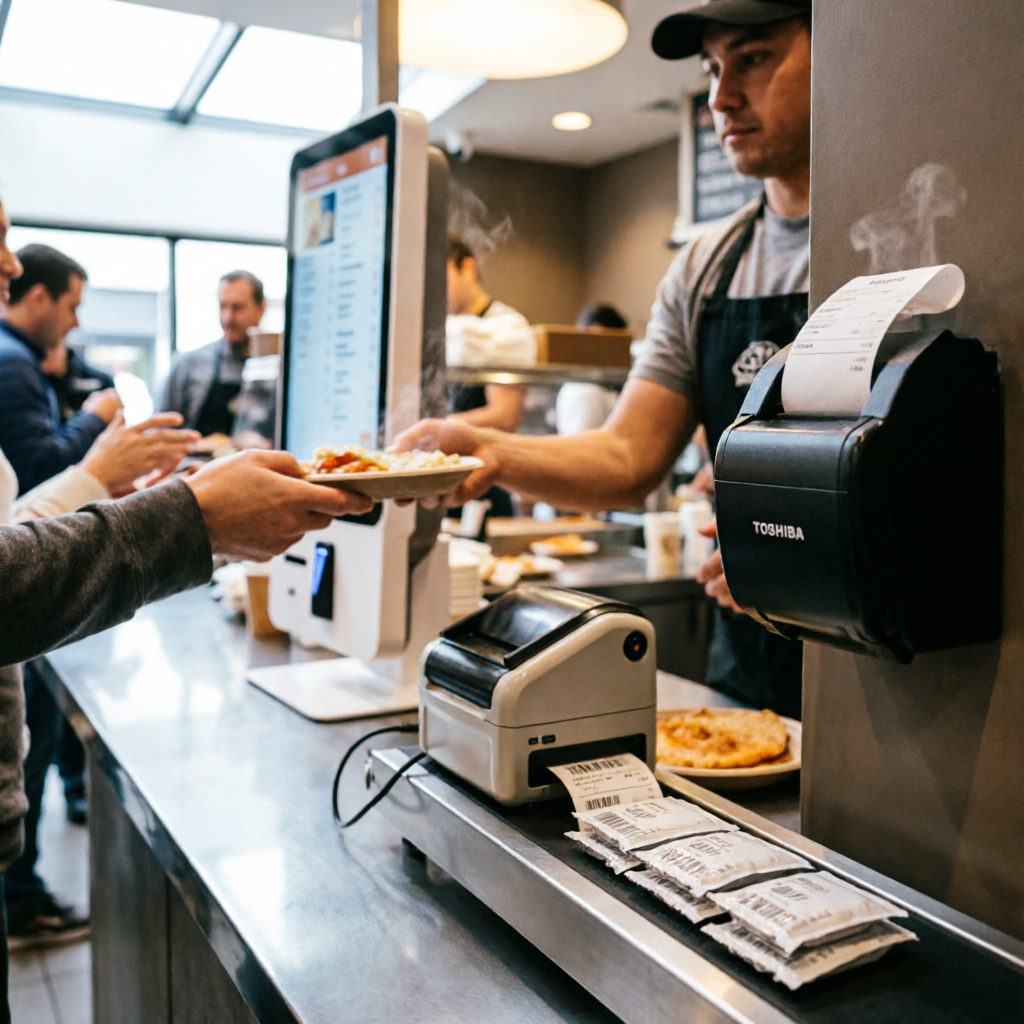
As an HSPOS-certified Toshiba integration partner, we’ve deployed over 1,200 Toshiba POS environments across grocery chains, quick-service restaurants (QSR), convenience stores, and fuel stations. This guide distills real-world learnings — not vendor claims — on what works, what requires configuration, and where to prioritize validation before go-live.
Thermal Printer Integration: Beyond Basic Compatibility
Not all thermal printers behave the same under Toshiba’s e-Port API. For mission-critical QSR deployments, we recommend models with POS receipt printer with auto-cutter feature — verified to reduce paper jams by 68% in high-volume drive-thru lanes (based on 2023 HSPOS field data). Avoid generic ESC/POS drivers; instead, use Toshiba-certified firmware bundles for consistent cut timing and error recovery.
Label Printer Use Cases: From Shelf Tags to Compliance Labels
In convenience stores, the POS label printer for convenience stores must handle three concurrent workloads: real-time price updates, inventory cycle-count tags, and regulatory labels (e.g., alcohol age warnings). Our integration checklist confirms native support only for Zebra ZD420 and Brother QL-1110NWB when paired with Toshiba’s RetailLink™ v5.3+. Legacy models require middleware — adding latency and maintenance overhead.
Kiosk System Deployment: QSR-Specific Validation Steps
A POS kiosk system for quick-service restaurants isn’t plug-and-play with Toshiba’s StoreEngine™. Key validations include: (1) touch gesture mapping consistency across Android/iOS kiosks, (2) offline transaction queuing during network blips, and (3) PCI-DSS-compliant card entry via encrypted PIN pads. HSPOS provides a free Toshiba POS hardware compatibility checklist covering these scenarios.
Hybrid Architecture in Practice: When to Go Local vs. Cloud
While Toshiba POS system vs cloud-based alternatives debates focus on theory, our clients choose hybrid for operational certainty: transaction processing stays local (StoreEngine™), while reporting, loyalty sync, and AI-driven demand forecasting run in Azure. This balances uptime SLA (99.99% in-store availability) with agility — especially for multi-site grocers managing 200+ SKUs per store.
Comments