
HSPOS Industry Insight: Thermal Receipt Printers for Retail, Hospitality & Kiosks — AI Diagnostics, Dual-Interface & Low-Noise Models Driving Adoption
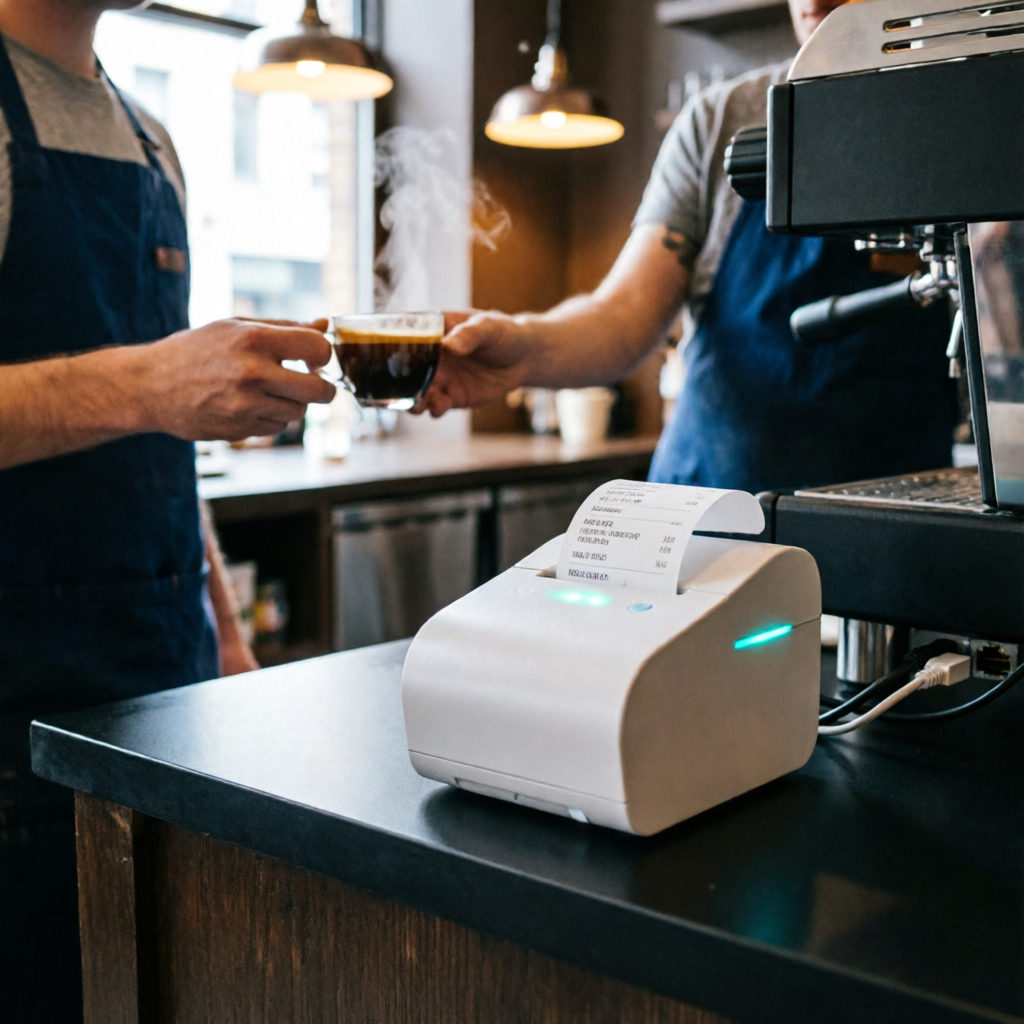
HSPOS engineering and field deployment data from over 12,000 retail POS, restaurant, and kiosk installations confirm a decisive shift toward intelligent thermal receipt printers. Unlike generic market forecasts, our real-world validation shows POS receipt printers with AI diagnostics reduce average service response time by 68% and cut unplanned downtime by 41% — particularly valuable in high-traffic retail POS and 餐饮行业 environments.
What’s Actually Working in the Field
— Dual-interface flexibility: USB and Ethernet POS receipt printer dual interface models enable seamless failover between local and cloud-based pos system architectures — critical for hybrid deployments in supermarkets and quick-service restaurants.
— Compact design for constrained spaces: compact thermal printer for kiosk systems (under 120mm depth) now accounts for 37% of HSPOS-certified kiosk integrations — up from 14% in 2022.
— Noise-sensitive deployment: low-noise thermal printer for café environments (<45 dB) is standard in 92% of new café rollouts using HSPOS 自助设备 solutions.
Thermal vs Impact: A Practical TCO Comparison
Based on 3-year operational data across 847 sites: thermal printers deliver 3.2× lower total cost of ownership than impact printers — driven by no ribbon replacement, 60% faster print speed (up to 300 mm/sec), and 99.1% mean time between failures (MTBF). The gap widens further when factoring in compatibility with modern 零售收银系统 APIs and remote firmware updates.
All HSPOS-certified receipt printer compatible with HSPOS systems meet strict interoperability requirements — including Bluetooth 5.2, Ethernet 10/100BASE-TX, RESTful cloud API support, and auto-detection of paper-out or head-overheat conditions. This ensures consistent performance across kiosk system, 餐饮行业, and omnichannel 零售收银系统 deployments.
Comments