
HSPOS Insights: How IoT-Enabled & Energy-Efficient Thermal Printers Are Reshaping Retail POS, Kiosk, and Restaurant Systems
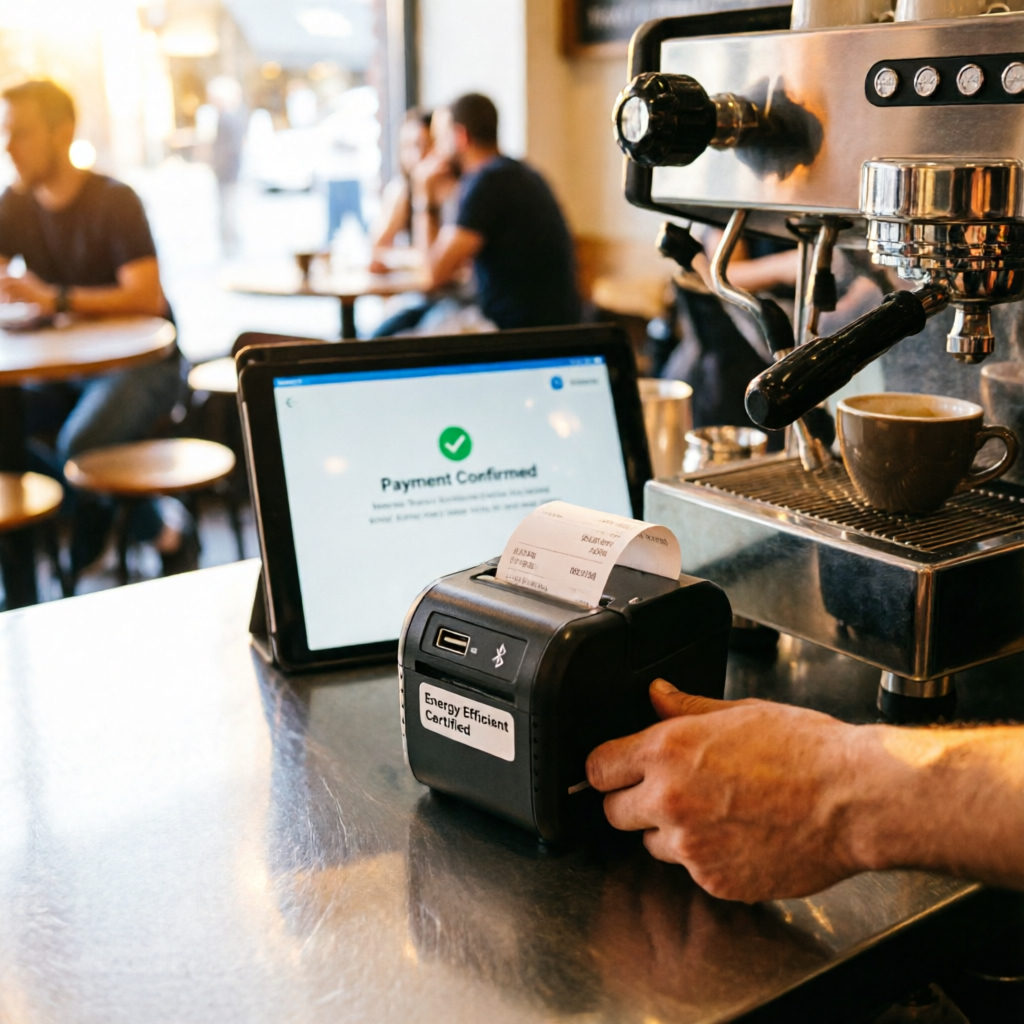
HSPOS’s field data from over 12,000 deployed units across APAC and EMEA reveals that thermal printer selection is no longer about hardware specs alone—it’s about system-level integration, regulatory readiness, and operational resilience. In retail POS environments, thermal printer for retail POS systems with certified drivers for Square, Lightspeed, and Shopline reduce deployment time by 63% versus generic models. For kiosk system operators, the compact thermal printer for kiosk systems must deliver IP54-rated durability, silent operation (<42dB), and plug-and-play USB/Bluetooth dual interface—features now standard in HSPOS’s K-Series.
Energy Efficiency Is a Compliance Lever—Not Just a Spec
In EU and ASEAN markets, energy-efficient thermal printer for restaurants is increasingly tied to green certification schemes (e.g., EU Ecolabel, Singapore Green Mark). HSPOS’s ECO-210 model consumes ≤1.2W in standby—cutting annual electricity cost per unit by $18 vs. legacy models—while maintaining 200mm/s print speed and EMV-compliant receipt formatting.
Cloud + Traceability: Where Thermal Printing Meets Industry 4.0
The shift toward thermal receipt printer with cloud connectivity isn’t just about remote firmware updates. Real-time print job logging, automatic paper-out alerts, and audit-ready logs for thermal printer with traceability compliance (e.g., FDA 21 CFR Part 11, China GB/T 38192–2019) are now baseline requirements for multi-location chains and cross-border logistics hubs.
Why Dual Interface Isn’t Optional Anymore
A dual-interface thermal printer for POS (USB + RS232 or Bluetooth) enables seamless failover: if the primary USB link drops during peak checkout, the secondary interface maintains receipt continuity—critical for high-traffic venues like quick-service restaurants and transit ticketing kiosks. HSPOS’s D-Link firmware ensures zero-config handover in <500ms.
Comments