
HSPOS Industry Report: Thermal Printer Trends Shaping Retail POS, Kiosk & Restaurant Systems in 2024
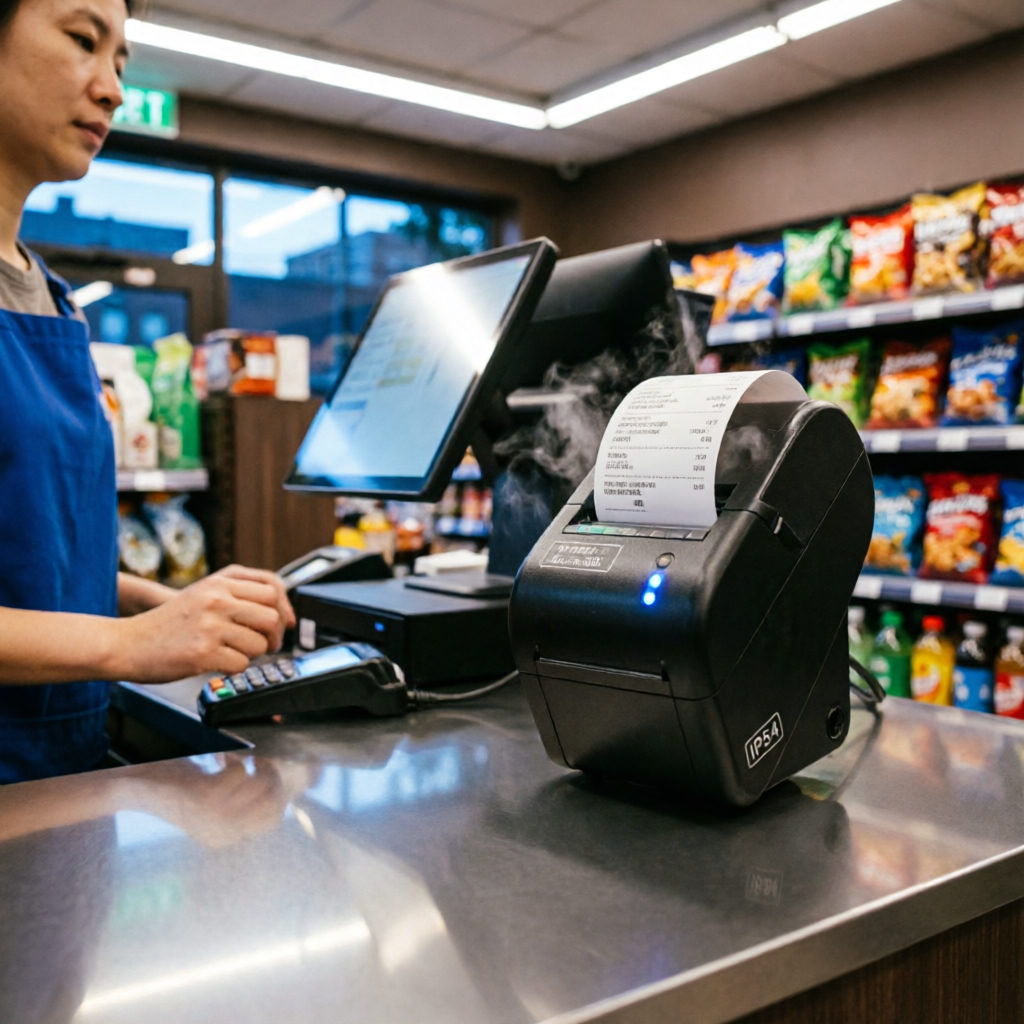
As digital infrastructure matures across frontline commerce channels, thermal printer selection is no longer about specs alone — it’s about contextual fit. HSPOS, serving over 1,200 retail, hospitality, and logistics clients since 2018, observes that top-performing deployments share three traits: purpose-built form factor, verified environmental resilience, and seamless integration into existing retail POS system or kiosk system stacks.
Why 80mm vs 58mm Isn’t Just About Size — It’s About Workflow Economics
In high-traffic retail checkout lanes, an 80mm thermal printer delivers wider receipts (ideal for itemized tax invoices or loyalty program details), while a 58mm thermal printer reduces paper cost by ~32% and fits tighter counter spaces. The real differentiator? Throughput consistency under sustained load — where HSPOS-certified models maintain ≤1.2s avg. print time at 200+ receipts/hour.
GS1 Compliance & IP54: Non-Negotiables Beyond the Label
Supermarkets adopting GS1 compliant barcode thermal printer for supermarkets report 40% faster traceability audits — but only when paired with certified label media and firmware-signed firmware updates. Similarly, IP54 rated thermal printer for industrial warehouse labeling must pass 72-hour salt-spray + dust ingress validation — not just marketing claims. HSPOS validates both in-house before listing.
Cloud, Bluetooth & Low-Noise: Where Integration Meets Experience
A POS thermal printer with cloud printing support enables remote fleet management — critical for multi-location restaurants. Meanwhile, low-noise thermal printer for restaurant front-counter use (<18 dB(A) at 1m) preserves guest ambiance without sacrificing speed. All HSPOS-recommended units ship with signed drivers for Windows, Linux, and macOS — eliminating on-site compatibility troubleshooting.
Comments